
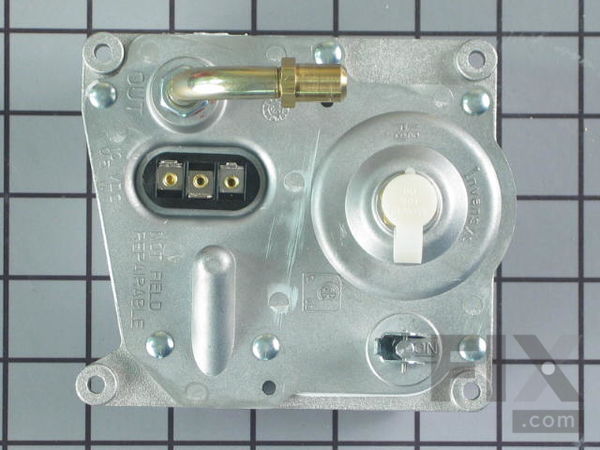
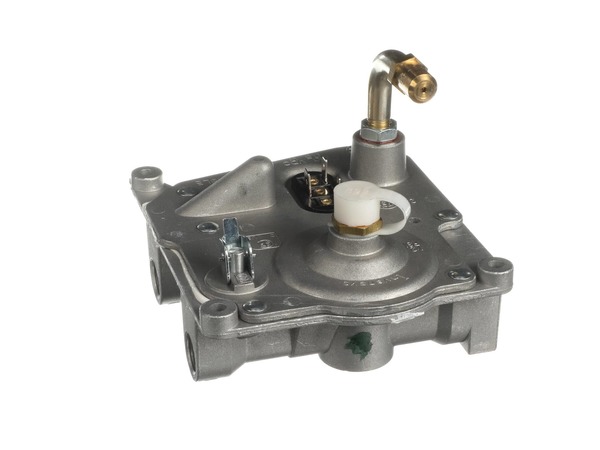
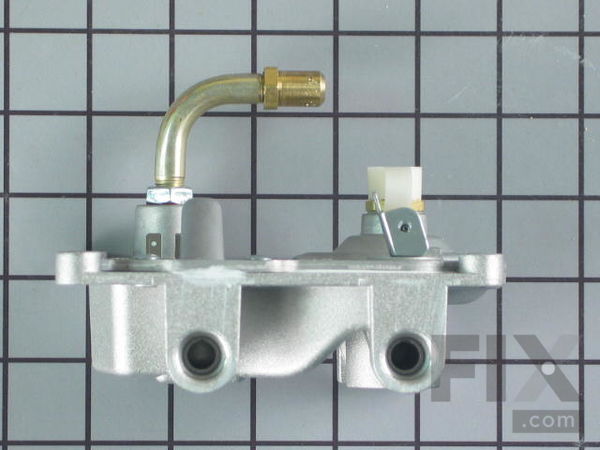
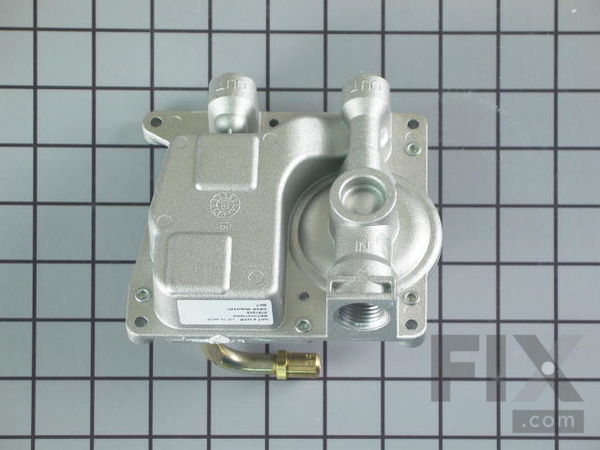
Range Gas Valve WPW10293048
$326.92
In Stock
- Fix Number:
- FIX11752203
- Manufacturer #:
- WPW10293048
- Manufactured by:
- Whirlpool
Jump to:
Product Description
Once this valve senses the desired heat, it will open up and allow the gas to travel to the oven burner.
-
Works with the following brands:Whirlpool, Kenmore, Estate, Maytag
-
Works with the following products:Range
-
Fixes the following symptoms:Will Not Start, Little to no heat when baking
-
Part# WPW10293048 replaces these:AP6018899, 8054079, 9761959, W10293048
- Works with the following brands:
- Whirlpool, Kenmore, Estate, Maytag
- Works with the following products
- Range
- Fixes the following symptoms
- Will Not Start, Little to no heat when baking
- Part# WPW10293048 replaces these:
- AP6018899, 8054079, 9761959, W10293048
Part Number Cross Reference
Questions and Answers
Be the first to ask our experts a question about this part!
Ask a Question
Ask our experts a question on this part and we'll respond as soon as we can.
Sorry, we couldn't find a match for "".
Here's a guide for finding your model number.
Something went wrong. Please try again later.
Your Question Has Been Submitted!
Our experts will send you an email as soon as your question has been answered.

Related Parts Additional or alternate parts to consider.
Installation Instructions Provided by Fix customers like you.
- < Prev
- 1
- Next >
Sort by:
Search filter:
Clear Filter
Your search term must have 3 or more characters.
Keep searches simple. Use keywords, e.g. "leaking", "pump", "broken" or "fit".
Sorry, we couldn't find any existing installation instruction that matched.
- Customer:
- Frank from Conyers, GA
- Parts Used:
- WPW10293048
- Difficulty Level:
- Easy
- Total Repair Time:
- 15 - 30 mins
- Tools:
- Screw drivers, Wrench set
Oven & Broiler wouldn't heat
This is important to know so you can tell whether this gas valve is your problem. "According to the manual tucked behind the oven, if one solenoid on the gas safety valve/regulator doesn't work, neither will work. It indicated that from the center (common) pin to each of the others, it should read 216 ohms." Mine read 200 to one side, non
... Read more
e to the other. I ordered a replacement, and was shipped a faulty valve, so testing it was very helpful to see that the new one was faulty too, got the same readings. Re-ordered another valve and it tested 200 ohms on both sides. Installed it and range works great now. Installation was easy, follow the directions listed in some of the previous entries on this site.
Read less
0 of 1 people
found this instruction helpful.
Was this instruction helpful to you?
Thank you for voting!
- Customer:
- James from Ft Lauderdale, FL
- Parts Used:
- WPW10293048, WPW10160649
- Difficulty Level:
- Easy
- Total Repair Time:
- 30 - 60 mins
- Tools:
- Screw drivers, Wrench set
Replace gas regulator
The first thing you want to do before installing the new gas regulator is unplug the electrical cord (power for the electric ignitors and the digital front panel) and the gas connection.
Now you need to take off the old regulator. When looking at the back of the range where the regulator is located you see three gas connection points ... Read more on the regulator- the in-coming gas, the out-going gas to the stovetop and the out-going gas to the oven. Disconnect all three with a wrench (the out-going connections need a smaller wrench than the in-coming connection) Open-end wrenches work better than a crescent-type wrench.
Next, unscrew the four mounting screws that hold the regulator onto back of the range. Now you need to move to the front side of the range and pull-out the broiler drawer.
Now you need to lie on the floor and look into the broiler area. You can see the front side of the gas regulator all the way in the back. You will need a flash light or small lamp to see what needs to be done next.
From this vantage point, you need to do three things. First, you need to disconnect three colored wires that are attached to a pin bracket attached to the gas regulator. Remember the color order when removing the wires (blue on top, orange in the middle and red on the bottom). Second, there is one more single wire to disconnect that is located to the left of the three wires (same type of disconnect). And third, disconnect the brass nut from the “j-shaped” copper flange sticking out of the front of the gas regulator.
Now everything is disconnected, almost. Now there is one final thing to do in order to “remove” the gas regulator from the range. From the back of the range, grab the regulator and pull away from the range AND at the same time “jimmy” in a few directions in order to dislodge the ‘j-shaped” copper flange from its mounting position. You might need to go back and look at this copper flange from the front to see just how this thing works.
When your mouth and tongue are in proper alignment and the proper “jimmying” has occurred, the gas regulator will be dislodged.
Now the new gas regulator can be installed.
Now, the first thing to do is mount the new gas regulator to the back of the range. Again we’re back to the notorious “j-shaped” copper flange. As you place the new gas regulator in position with the four mounting screw holes you also have to position the “j-shaped” copper flange into its mounting position inside the oven. It’s a two-fold proposition. You just have to “jack” with it until the flange is inserted in the proper position and the screw holes are in alignment.
If everybody is in-place, you install the four mounting screws. Next, attach the out-going gas connections to the regulator. Use Teflon tape or pipe thread sealant (for gas) before attachment.
Now move to the front of the range, with your light in place, attach the collared wires to the pin bracket and the single wire. Next, tighten the brass nut of the “j-shaped” copper flange. While you’re here, might want to re-check the wire connections again.
Last thing to do, connect the in-coming gas to the gas regulator.
Now you can plug the electric chord back in and turn the gas valve on.
If you don’t witness an explosion, go to the front of the range and push the BAKE button and the START button. If all went “according to Hoyle”, it’s time to cook a pizza.
Hope this helps someone.
Now you need to take off the old regulator. When looking at the back of the range where the regulator is located you see three gas connection points ... Read more on the regulator- the in-coming gas, the out-going gas to the stovetop and the out-going gas to the oven. Disconnect all three with a wrench (the out-going connections need a smaller wrench than the in-coming connection) Open-end wrenches work better than a crescent-type wrench.
Next, unscrew the four mounting screws that hold the regulator onto back of the range. Now you need to move to the front side of the range and pull-out the broiler drawer.
Now you need to lie on the floor and look into the broiler area. You can see the front side of the gas regulator all the way in the back. You will need a flash light or small lamp to see what needs to be done next.
From this vantage point, you need to do three things. First, you need to disconnect three colored wires that are attached to a pin bracket attached to the gas regulator. Remember the color order when removing the wires (blue on top, orange in the middle and red on the bottom). Second, there is one more single wire to disconnect that is located to the left of the three wires (same type of disconnect). And third, disconnect the brass nut from the “j-shaped” copper flange sticking out of the front of the gas regulator.
Now everything is disconnected, almost. Now there is one final thing to do in order to “remove” the gas regulator from the range. From the back of the range, grab the regulator and pull away from the range AND at the same time “jimmy” in a few directions in order to dislodge the ‘j-shaped” copper flange from its mounting position. You might need to go back and look at this copper flange from the front to see just how this thing works.
When your mouth and tongue are in proper alignment and the proper “jimmying” has occurred, the gas regulator will be dislodged.
Now the new gas regulator can be installed.
Now, the first thing to do is mount the new gas regulator to the back of the range. Again we’re back to the notorious “j-shaped” copper flange. As you place the new gas regulator in position with the four mounting screw holes you also have to position the “j-shaped” copper flange into its mounting position inside the oven. It’s a two-fold proposition. You just have to “jack” with it until the flange is inserted in the proper position and the screw holes are in alignment.
If everybody is in-place, you install the four mounting screws. Next, attach the out-going gas connections to the regulator. Use Teflon tape or pipe thread sealant (for gas) before attachment.
Now move to the front of the range, with your light in place, attach the collared wires to the pin bracket and the single wire. Next, tighten the brass nut of the “j-shaped” copper flange. While you’re here, might want to re-check the wire connections again.
Last thing to do, connect the in-coming gas to the gas regulator.
Now you can plug the electric chord back in and turn the gas valve on.
If you don’t witness an explosion, go to the front of the range and push the BAKE button and the START button. If all went “according to Hoyle”, it’s time to cook a pizza.
Hope this helps someone.
Read less
0 of 1 people
found this instruction helpful.
Was this instruction helpful to you?
Thank you for voting!
- Customer:
- Thomas from Farr West, UT
- Parts Used:
- WPW10293048
- Difficulty Level:
- Really Easy
- Total Repair Time:
- 15 - 30 mins
- Tools:
- Pliers, Wrench (Adjustable)
no heat from bake and broil elements
My range would click when I turned on bake but there was no heat. I tried turning on broil and the same thing happened. I did not smell any gas when I opened the door either. I pulled a parts schematic and found that the ignition for the bake and broil are two different systems so I ruled out the igniters and read from others that the
... Read more
gas valve may be the problem. Since this part is more expensive than the other parts, I figured that this must be the most likely problem.
This repair was easier than I expected. I slid out the range and turned off the gas and unplugged the power. I then disconnected the main gas line and the two lines leading out of the gas valve. I unscrewed the four mounting screws and gently moved the part down and out from a feeder tube underneath. I was worried that I would mix up the wires when I went to disconnect them so I took a picture as a reference. I found that the wires have different size connectors so you just have to match up the right sizes when you reconnect them and you shouldn’t have a problem. Taking the picture was a good backup though. I installed the new part and now everything has been working great for three weeks and counting.
Read less
0 of 1 people
found this instruction helpful.
Was this instruction helpful to you?
Thank you for voting!
- < Prev
- 1
- Next >
Model Compatibility
This part works with the following models:
Fix Number: FIX11752203
Manufacturer Part Number: WPW10293048
| Brand | Model Number | Description |
|---|---|---|
| Kenmore | 66475272502 | Range |
| Kenmore | 66475273502 | Range |
| Kenmore | 66475274502 | Range |
| Kenmore | 66475279502 | Range |
| Kenmore | 66572002100 | Range |
| Kenmore | 66572002101 | Range |
| Kenmore | 66572002102 | Range |
| Kenmore | 66572002103 | Range |
| Kenmore | 66572002104 | Range |
| Kenmore | 66572004100 | Range |
| Kenmore | 66572004101 | Range |
| Kenmore | 66572004103 | Range |
| Kenmore | 66572004104 | Range |
| Kenmore | 66572012100 | Range |
| Kenmore | 66572012101 | Range |
| Kenmore | 66572012102 | Range |
| Kenmore | 66572012103 | Range |
| Kenmore | 66572012104 | Range |
| Kenmore | 66572014100 | Range |
| Kenmore | 66572014101 | Range |
| Kenmore | 66572014103 | Range |
| Kenmore | 66572014104 | Range |
| Kenmore | 66572022100 | Range |
| Kenmore | 66572022101 | Range |
| Kenmore | 66572022102 | Range |
| Kenmore | 66572023100 | Range |
| Kenmore | 66572023102 | Range |
| Kenmore | 66572024100 | Range |
| Kenmore | 66572024102 | Range |
| Kenmore | 66572029100 | Range |
Mail-In Recycling Rebate
Some of the parts we sell are eligible for mail-in rebates since we can recycle them. We will display any applicable rebates in your shopping cart. To redeem your rebate, contact Customer Service after you have received your part.