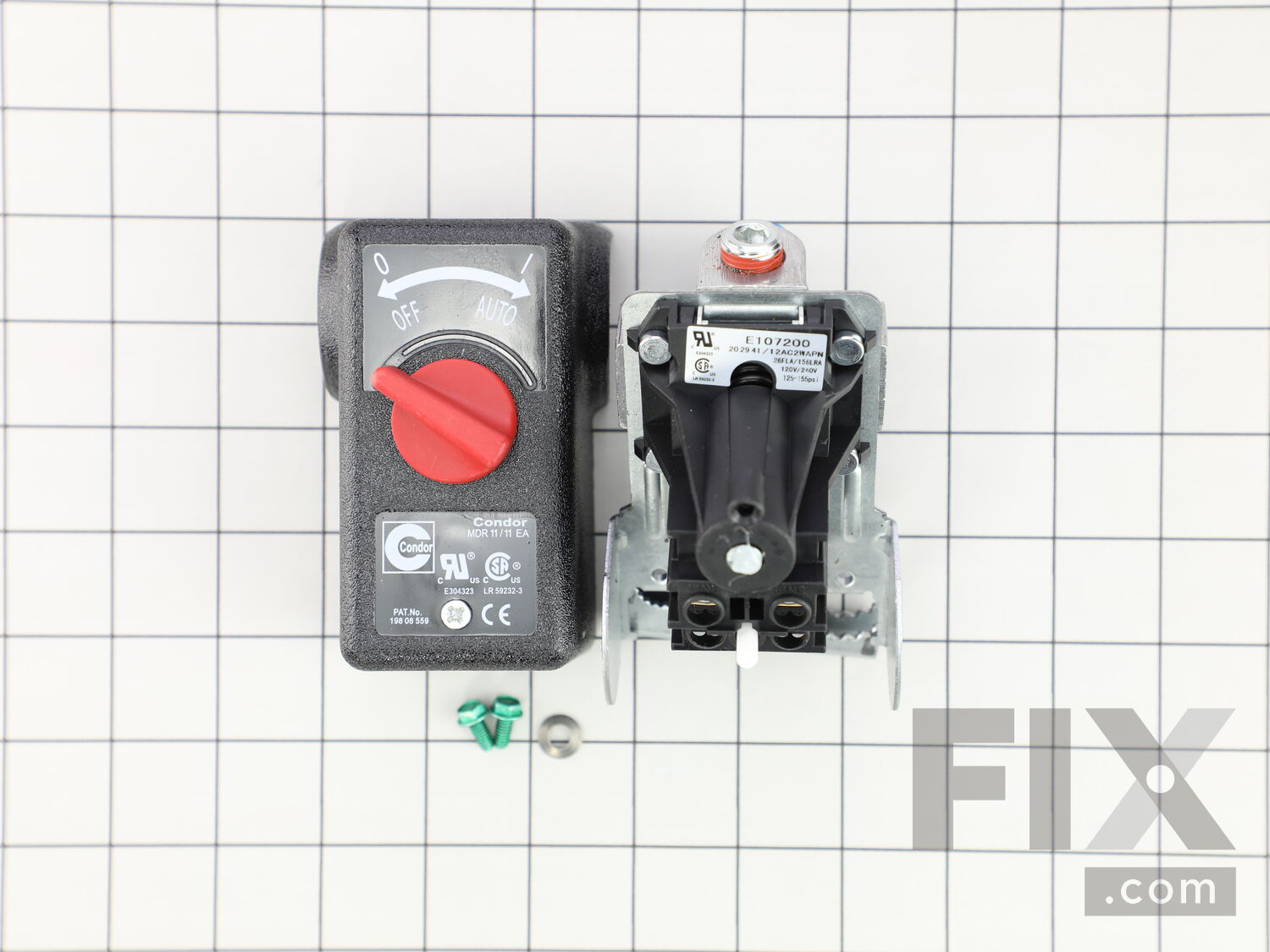
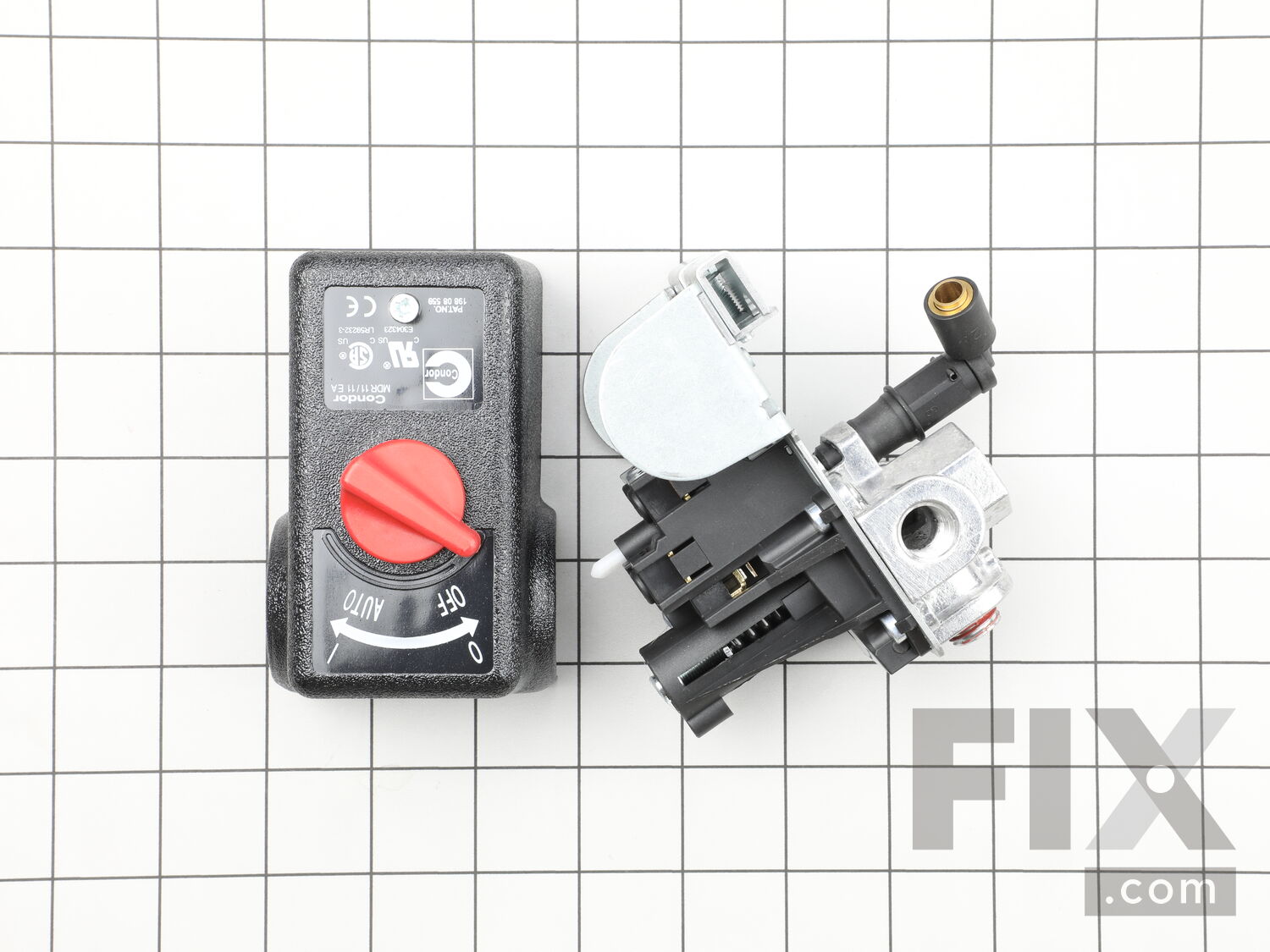
PRESSURE SWITCH 5140169-46
$75.46
In Stock
- Fix Number:
- FIX18983141
- Manufacturer #:
- 5140169-46
- Manufactured by:
- DeWALT
Jump to:
Product Description
-
Works with the following brands:DeWALT, Porter Cable
-
Works with the following products:Compressor
-
Part# 5140169-46 replaces these:5140169-46, P5140169-46
- Works with the following brands:
- DeWALT, Porter Cable
- Works with the following products
- Compressor
- Part# 5140169-46 replaces these:
- 5140169-46, P5140169-46
Part Number Cross Reference
Questions and Answers
Be the first to ask our experts a question about this part!
Ask a Question
Ask our experts a question on this part and we'll respond as soon as we can.
Sorry, we couldn't find a match for "".
Here's a guide for finding your model number.
Something went wrong. Please try again later.
Your Question Has Been Submitted!
Our experts will send you an email as soon as your question has been answered.

Related Parts Additional or alternate parts to consider.
Installation Instructions Provided by Fix customers like you.
- < Prev
- 1
- Next >
Sort by:
Search filter:
Clear Filter
Your search term must have 3 or more characters.
Keep searches simple. Use keywords, e.g. "leaking", "pump", "broken" or "fit".
Sorry, we couldn't find any existing installation instruction that matched.
- Customer:
- Everett from ALACHUA, FL
- Parts Used:
- 5140169-46
- Difficulty Level:
- A Bit Difficult
- Total Repair Time:
- 30 - 60 mins
Switch was burned up and pressure relief was failing
1. Important prep: Turn off the power to the unit at the breaker. Drain all the air from the tank so there is not any pressure on the unit. You can use the drain valve at the bottom of the tank to relieve the pressure. Make sure tank is empty of all air pressure and electrical connections are not live.
2. Remove the plas ... Read more tic cover from the old switch by loosening the screw in the middle and lifting it off. It is a good idea to take a picture of the old switch with your phone before removing further parts so that you have a reference to reinstall things in the correct position.
3. After the tank is empty of air, remove the small bleeder line going from the top center of the tank to to switch at the point where it contacts the top center of the tank by loosening the compression fitting nut.
4. There is a little slide-in collar connector at the other end of the bleeder line where it enters the bleeder valve on the switch. Press the collar inward then pull straight out on the line itself to separate it from the switch mechanism. Save this line as you will need to reinstall on the new switch mechanism once it's on the compressor.
5. Remove the wires from the switch, both the incoming feed from the breaker and the wires going from the switch to the motor. Take note of the wire locations as they will need to be fed into and reconnected to the new switch in the original positions.
6. Using the correct size open-end wrench, remove the pressure gauge and the brass safety pressure release valve from the switch's two side manifold ports. Set aside these parts for reinstallation on the new unit.
7. Using a wrench on the nut on the bottom of the old switch, loosen the entire switch from the 1/4" pipe nipple protruding from the top of the tank by turning counterclockwise. You may need to hold the nipple in place with a regular pipe wrench to get the switch to separate from the nipple at the manifold and to keep the nipple from screwing out of the tank. Also note that you may need to loosen the bolts holding the motor in place and loosen the belt to allow clearance for the old switch to turn a full revolution. Keep turning the switch unit counterclockwise till the old switch mechanism is free from the pipe nipple.
8. Once the old switch is off the tank, use some pipe thread tape at all connections and install the new switch in reverse order, starting with the switch itself on the 1/4" nipple, reinstall the pressure gauge and safety relief valve, and the electrical connections in the same places as they were located on the old switch. Make sure electrical connections are tight and clamped in place, but don't overtighten the switch on the nipple or overtighten the gauge or safety relief valve when reinstalling these parts.
9. Position the bleeder line so that you can push the bare end into the collar connector on the new switch until it locks in place and then reattach it to the top center of the tank at the nut end using the compression fitting. No need for thread tape at this fitting. Be careful not to overtighten the nut at the tank port of entry.
10. If you had to loosen the motor mount bolts to afford clearance for removal of the switch, re-tighten the belt and lock the mount bolts back down. Reinstall any covers or safety shields removed. Put the new switch cover on the new switch making sure to properly align the on/off dial with the small plastic stem inside the switch housing. Switch the dial to off for now.
11. Close any valves opened to relieve pressure in step one and repower the unit at the breaker. Turn the unit back on with the on/off dial at the switch. Unit should begin pumping up and should cut off at the factory set pressure of 155 PSI.
12. Check for leaks at all reinstalled ports and connections. If thread tape was used and unions properly tightened, leaks should not be present.
2. Remove the plas ... Read more tic cover from the old switch by loosening the screw in the middle and lifting it off. It is a good idea to take a picture of the old switch with your phone before removing further parts so that you have a reference to reinstall things in the correct position.
3. After the tank is empty of air, remove the small bleeder line going from the top center of the tank to to switch at the point where it contacts the top center of the tank by loosening the compression fitting nut.
4. There is a little slide-in collar connector at the other end of the bleeder line where it enters the bleeder valve on the switch. Press the collar inward then pull straight out on the line itself to separate it from the switch mechanism. Save this line as you will need to reinstall on the new switch mechanism once it's on the compressor.
5. Remove the wires from the switch, both the incoming feed from the breaker and the wires going from the switch to the motor. Take note of the wire locations as they will need to be fed into and reconnected to the new switch in the original positions.
6. Using the correct size open-end wrench, remove the pressure gauge and the brass safety pressure release valve from the switch's two side manifold ports. Set aside these parts for reinstallation on the new unit.
7. Using a wrench on the nut on the bottom of the old switch, loosen the entire switch from the 1/4" pipe nipple protruding from the top of the tank by turning counterclockwise. You may need to hold the nipple in place with a regular pipe wrench to get the switch to separate from the nipple at the manifold and to keep the nipple from screwing out of the tank. Also note that you may need to loosen the bolts holding the motor in place and loosen the belt to allow clearance for the old switch to turn a full revolution. Keep turning the switch unit counterclockwise till the old switch mechanism is free from the pipe nipple.
8. Once the old switch is off the tank, use some pipe thread tape at all connections and install the new switch in reverse order, starting with the switch itself on the 1/4" nipple, reinstall the pressure gauge and safety relief valve, and the electrical connections in the same places as they were located on the old switch. Make sure electrical connections are tight and clamped in place, but don't overtighten the switch on the nipple or overtighten the gauge or safety relief valve when reinstalling these parts.
9. Position the bleeder line so that you can push the bare end into the collar connector on the new switch until it locks in place and then reattach it to the top center of the tank at the nut end using the compression fitting. No need for thread tape at this fitting. Be careful not to overtighten the nut at the tank port of entry.
10. If you had to loosen the motor mount bolts to afford clearance for removal of the switch, re-tighten the belt and lock the mount bolts back down. Reinstall any covers or safety shields removed. Put the new switch cover on the new switch making sure to properly align the on/off dial with the small plastic stem inside the switch housing. Switch the dial to off for now.
11. Close any valves opened to relieve pressure in step one and repower the unit at the breaker. Turn the unit back on with the on/off dial at the switch. Unit should begin pumping up and should cut off at the factory set pressure of 155 PSI.
12. Check for leaks at all reinstalled ports and connections. If thread tape was used and unions properly tightened, leaks should not be present.
Read less
1 person
found this instruction helpful.
Was this instruction helpful to you?
Thank you for voting!
- < Prev
- 1
- Next >
Model Compatibility
Mail-In Recycling Rebate
Some of the parts we sell are eligible for mail-in rebates since we can recycle them. We will display any applicable rebates in your shopping cart. To redeem your rebate, contact Customer Service after you have received your part.