




Models
>
JVM1190WD001
JVM1190WD001 General Electric Microwave
Jump to:
Find Part by Name
Keep searches simple, eg. "belt" or "pump".
Diagrams for JVM1190WD001
Viewing 1 of 1
Manuals & Guides for JVM1190WD001
Click to downloadKeep searches simple, eg. "belt" or "pump".
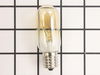
$24.00
This 40-Watt 130-Volt lightbulb is a genuine OEM replacement for your microwave. The bulb is used either inside the microwave and turns on when the door is open, or the appliance is running. Or it can...
In Stock
Order now and your part arrives by Apr 11
In Stock
Order now and your part arrives by Apr 11
In Stock
Order now and your part arrives by Apr 11
In Stock
Order now and your part arrives by Apr 11

In Stock
Order now and your part arrives by Apr 11
In Stock
Order now and your part arrives by Apr 11
In Stock
Order now and your part arrives by Apr 11
In Stock
Order now and your part arrives by Apr 11
Special Order

Questions and Answers
We're sorry, but our Q&A experts are temporarily unavailable.
Please check back later if you still haven't found the answer you need.
Common Problems and Symptoms for JVM1190WD001
Viewing 2 of 2


Keep searches simple. Use keywords, e.g. "leaking", "pump", "broken" or "fit".
- Customer:
- william from san antonio, TX
- Parts Used:
- WB36X10003
- Difficulty Level:
- A Bit Difficult
- Total Repair Time:
- 15 - 30 mins
- Tools:
- Pliers, Screw drivers
bulb had broken off in base that was still screwed into socket
At first I tried to use pliers to unscrew the base,very uncomfortable working position,upside down and backwards(the microwave is installed over the range top)very limited space for your body and arms to manuver and you really cant see the base,all of this took place after the breaker was turned off ofcourse,finally figured out that you c
... Read more
an drop the entire bottom housing of the microwave by unscrewing 6 screws and the light sockets are easily accessable once you lower it,take out 1 retaining screw ,remove the entire socket and unscrewed the broken base and replaced the bulbs,I said bulbs,there is no sense in having to replace another bulb in who knows how long since only one had burned out but they were both the same age
Read less
Was this instruction helpful to you?
Thank you for voting!
- Customer:
- Theodore from Medical Lake, WA
- Parts Used:
- WB27X10597
- Difficulty Level:
- Really Easy
- Total Repair Time:
- Less than 15 mins
- Tools:
- Screw drivers
Not working as far as heating or cooking
Replaced High Voltage Diode. Very carfully due to the extream danger of a electrical shock.
Was this instruction helpful to you?
Thank you for voting!
- Customer:
- Andras from Lexington, MA
- Parts Used:
- WB27X10195
- Difficulty Level:
- A Bit Difficult
- Total Repair Time:
- 1- 2 hours
- Tools:
- Screw drivers
Oven would not power up
There are 4 thermostats (aka TCO = Thermal Cut Out) in the GE JVM1440BH04
The schematic is under the cover in a black envelope to the top left of the unit if you face the door.
Check the fuse first. You can remove the front grate, then the numpad on the right. The fuse is right behind it. It's a 250V 20A Class F fuse.
... Read more />
There are four (4) TCOs or Thermal Cut Out thermostats in this puppy:
1) There is a thermostat behind the button panel to the left, facing down. If blown, it breaks the power coming into the unit and will cause a no power situation.
2) There is another TCO or thermostat near the top lamp, to the left, in a small cavity. That one also breaks power to the unit and will cause a no power situation. It's a 100 C / 0 C thermostat. This was the one that blew on me after I left the stove running (for heating in a black-out) under the microwave.
"Cavity TCO" or "Thermostat" part number 61 on the schematics, part number PS239319
3) There is yet another power-breaking TCO or thermostat in the cavity behind the fan that cools the microwave coils. You have to remove the sheet metal on the right of the microwave to access it. This one also breaks power and will cause a no power situation.
1), 2) and 3) should test out to be 0 Ohms with a resistance meter (Digital Multimeter) if working correctly.
4) There is a thermostat which normally does not let current through it. It is mounted in a vertical position to the back wall behind the front panel on the right. This one is used for the sensor reheat function apparently and will close when the temperature in the microwave reaches approx. 60 C.
4) should have infinite resistance with a resistance meter under normal circumstances.
The schematic is under the cover in a black envelope to the top left of the unit if you face the door.
Check the fuse first. You can remove the front grate, then the numpad on the right. The fuse is right behind it. It's a 250V 20A Class F fuse.
... Read more />
There are four (4) TCOs or Thermal Cut Out thermostats in this puppy:
1) There is a thermostat behind the button panel to the left, facing down. If blown, it breaks the power coming into the unit and will cause a no power situation.
2) There is another TCO or thermostat near the top lamp, to the left, in a small cavity. That one also breaks power to the unit and will cause a no power situation. It's a 100 C / 0 C thermostat. This was the one that blew on me after I left the stove running (for heating in a black-out) under the microwave.
"Cavity TCO" or "Thermostat" part number 61 on the schematics, part number PS239319
3) There is yet another power-breaking TCO or thermostat in the cavity behind the fan that cools the microwave coils. You have to remove the sheet metal on the right of the microwave to access it. This one also breaks power and will cause a no power situation.
1), 2) and 3) should test out to be 0 Ohms with a resistance meter (Digital Multimeter) if working correctly.
4) There is a thermostat which normally does not let current through it. It is mounted in a vertical position to the back wall behind the front panel on the right. This one is used for the sensor reheat function apparently and will close when the temperature in the microwave reaches approx. 60 C.
4) should have infinite resistance with a resistance meter under normal circumstances.
Read less
Was this instruction helpful to you?
Thank you for voting!