



Like what you're reading?
Get your fix of expert articles delivered straight to your inbox!
Oops! Please double check your email address.
No Thanks - I don't like cool stuff


It’s no surprise that popcorn is one of America’s favorite foods. It was first domesticated in the Americas thousands of years ago. Archaeologists discovered popcorn ears in New Mexico that date to more than 5,600 years ago.http://msue.anr.msu.edu/news/popcorn_popping_with_flavor_and_history Today the crunchy snack is a mainstay at movie theaters, carnivals, and in many of our kitchens.
Popcorn is often lumped in with junk food, but it’s the only 100 percent unprocessed, whole-grain food we eat, and it boasts some notable nutritional benefits. It even contains more polyphenols per serving than most fruits and vegetables. (Polyphenols are antioxidants that protect cells from damage.) Of course, don’t ditch fruits and veggies; they contain lots of other nutrients popcorn doesn’t provide. But when you’re in the mood to nosh on something crunchy, popcorn is a great choice.
Before you get popping, know this: Not all popcorn is created equal. Read on to learn about the popcorn products you should avoid, discover easy ways to prepare popcorn, and try delicious recipes – all made with real-food ingredients.
Pre-packaged microwave and stovetop popcorn is convenient and smells divine, but it’s associated with health risks. While it may be getting safer due to campaigns by environmental groups, it’s probably best to avoid processed versions for the following reasons:
Safer processed popcorn is great news for consumers. But the best way to ensure popcorn is a safe and healthy snack is to buy kernels and make it yourself.
If you hear the word “corn” and think of genetically modified organisms (GMOs), you’re not alone, and there’s good reason for that. Ninety-two percent of field corn grown in the U.S. is genetically modified.http://responsibletechnology.org/gmo-education/gmos-in-food/ But field corn and popcorn are different, and popcorn seeds have not yet been genetically modified, according to GMO expert Jeffrey Smith.http://elizabethyarnell.com/effortlesseating/2012/06/popcorn-is-never-a-gmo/
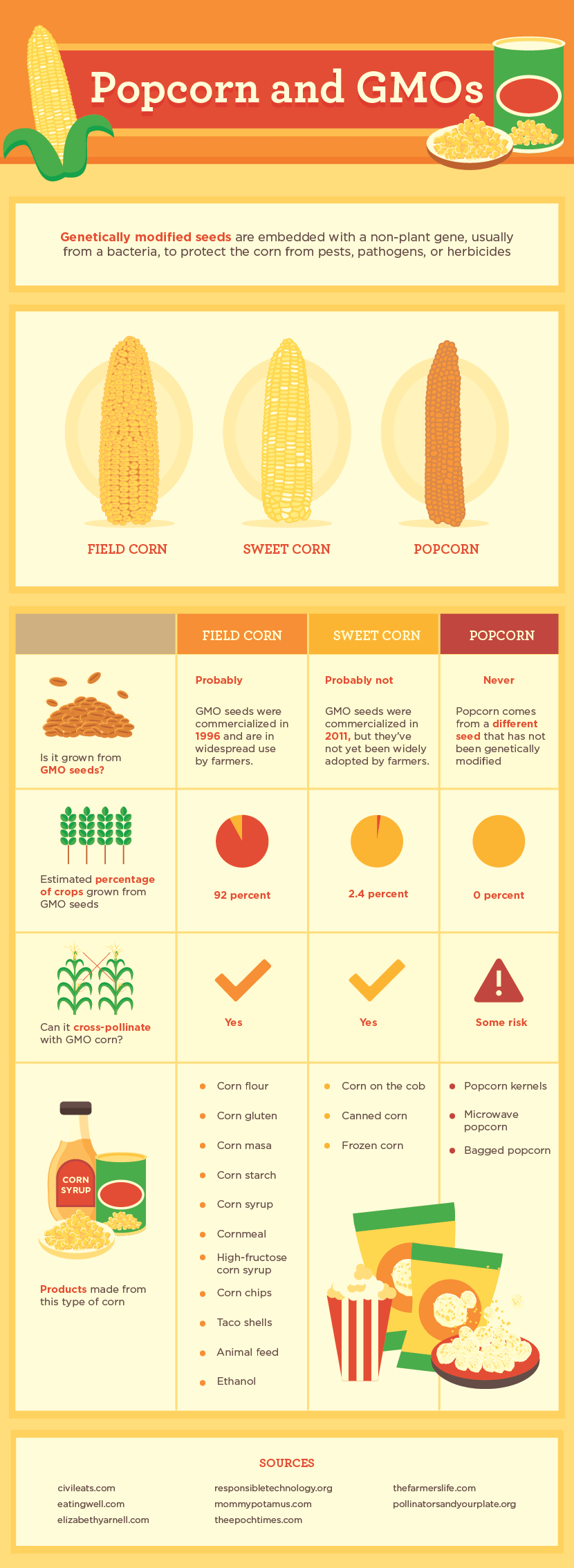
There’s some risk that GMO sweet and field corn pollen can blow into popcorn fields and contaminate popcorn with genetically modified materials, according to the Organic Consumer Association. However, Smith says the risk is slight.http://elizabethyarnell.com/effortlesseating/2012/06/popcorn-is-never-a-gmo/ There are other reasons to choose organic kernels, though. Conventional farmers grow corn in vast monocultures, making it susceptible to insect and fungal damage. That’s why it tends to be a heavily sprayed crop.http://grist.org/article/checkout-line-iffy-pop/
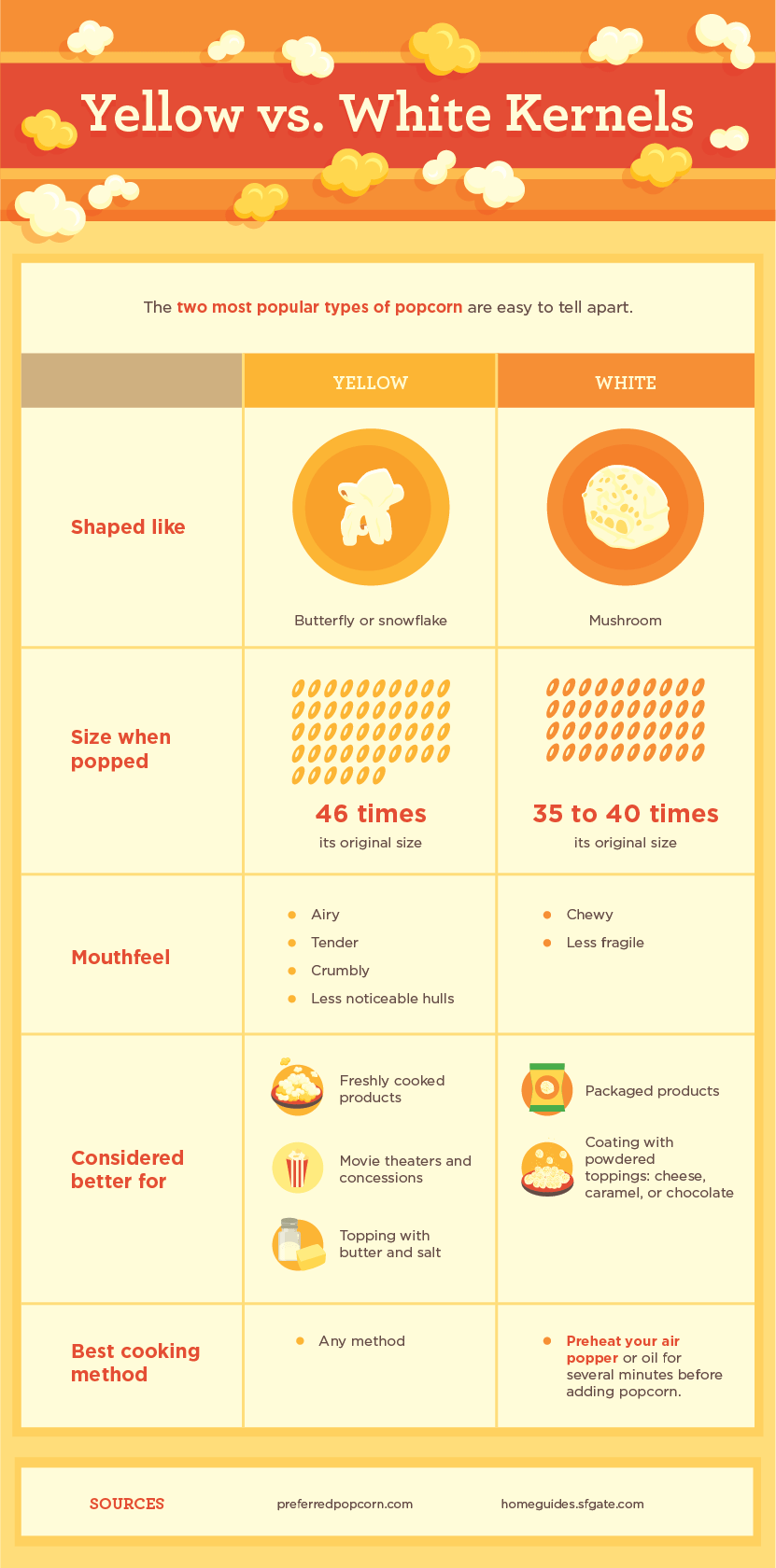
Yellow and white popcorn are the most commonly grown types of popcorn. You can also buy heirloom kernels, which come in various colors including red, white, blue, and black. (All popcorn looks white when popped.) Heirloom kernels are often more nutritious and have more flavor and complexity than yellow and white popcorn.http://www.thekitchn.com/ingredient-spotlight-heirloom-130140 By choosing them, you help to preserve traditional corn cultures.http://www.nytimes.com/2014/10/01/dining/heirloom-popcorn-helps-a-snack-reinvent-itself.html?_r=0 Corn was the most important food in the Americas for thousands of years, and many cultures consider it sacred.http://www.motherearthnews.com/organic-gardening/heirloom-corn-varieties-zewz1307zpit.aspxhttps://www.slowfoodusa.org/blog-post/indigenous-peoples-stand-up-to-save-native-corn
No matter which kernels you choose, there are a number of ways to prepare them. Use this guide to decide how many kernels to use:

Once you’ve popped a bowl of fluffy popcorn, it’s time to season. Popcorn doesn’t need much – a little butter and salt goes a long way – but it’s fun to go gourmet with these recipes. First, make about eight cups of popcorn. Then while it’s popping, mix the topping ingredients together. Drizzle the topping on the popcorn, and use a long wooden spoon to toss or stir it throughout the popcorn. For extra flavor, cook popcorn with unrefined coconut oil.
Popcorn is a crunchy, versatile, whole-grain snack with a rich history in America. Pop your own kernels, top them with real-food ingredients, and leave the guilt behind.
Embed the article on your site

Written by:
Craft beer is quickly gaining popularity. Learn how to perfectly pair your ...
Be a better cook by learning about the small differences in modern cookware...
Egg carton labels claim a lot of good things. Organic, cage-free, all-natur...
Get your fix of expert articles delivered straight to your inbox!
No Thanks - I don't like cool stuff