



Like what you're reading?
Get your fix of expert articles delivered straight to your inbox!
Oops! Please double check your email address.
No Thanks - I don't like cool stuff


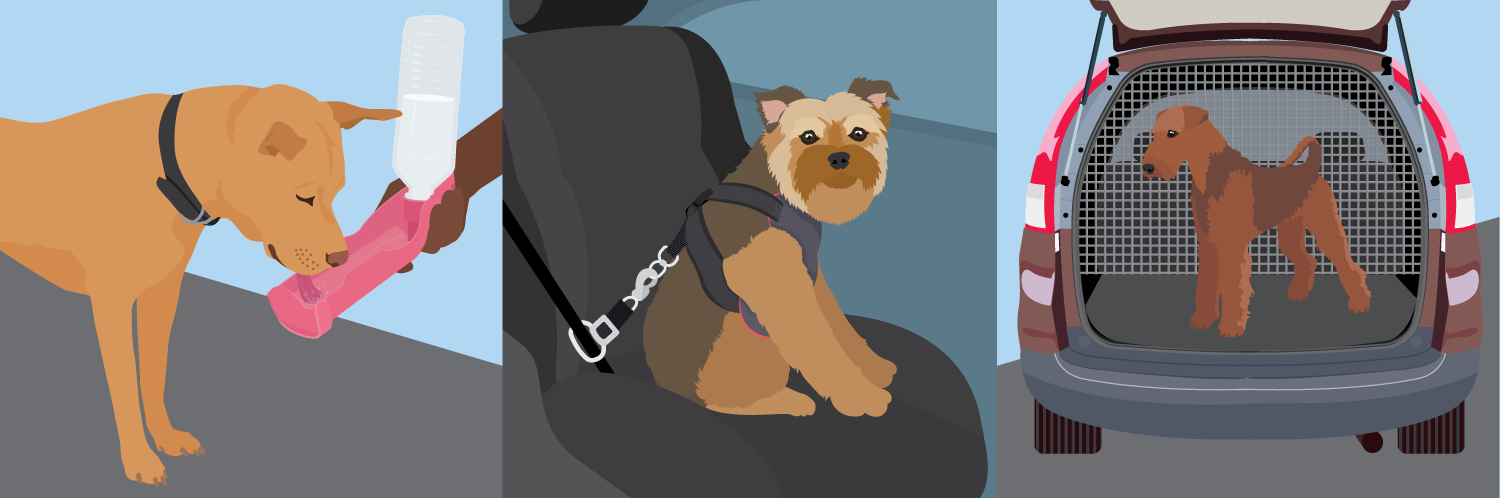
Ever since the days of John Steinbeck’s cross-country tour with his poodle, immortalized in Travels with Charley, people have been going out looking for adventure and bringing their dogs with them. What is better than having them come along for the ride? My husband I rarely travel without a dog or four, so we are old pros at this. We know that you really need to plan better than Steinbeck even before driving short distances with your furry pals on board, if you want them to be comfortable and safe. It’s not as if your dog can tell you he’s uncomfortable, but if your dog is anxious or not settled in, he’ll find other ways of making that clear. And you won’t like them!
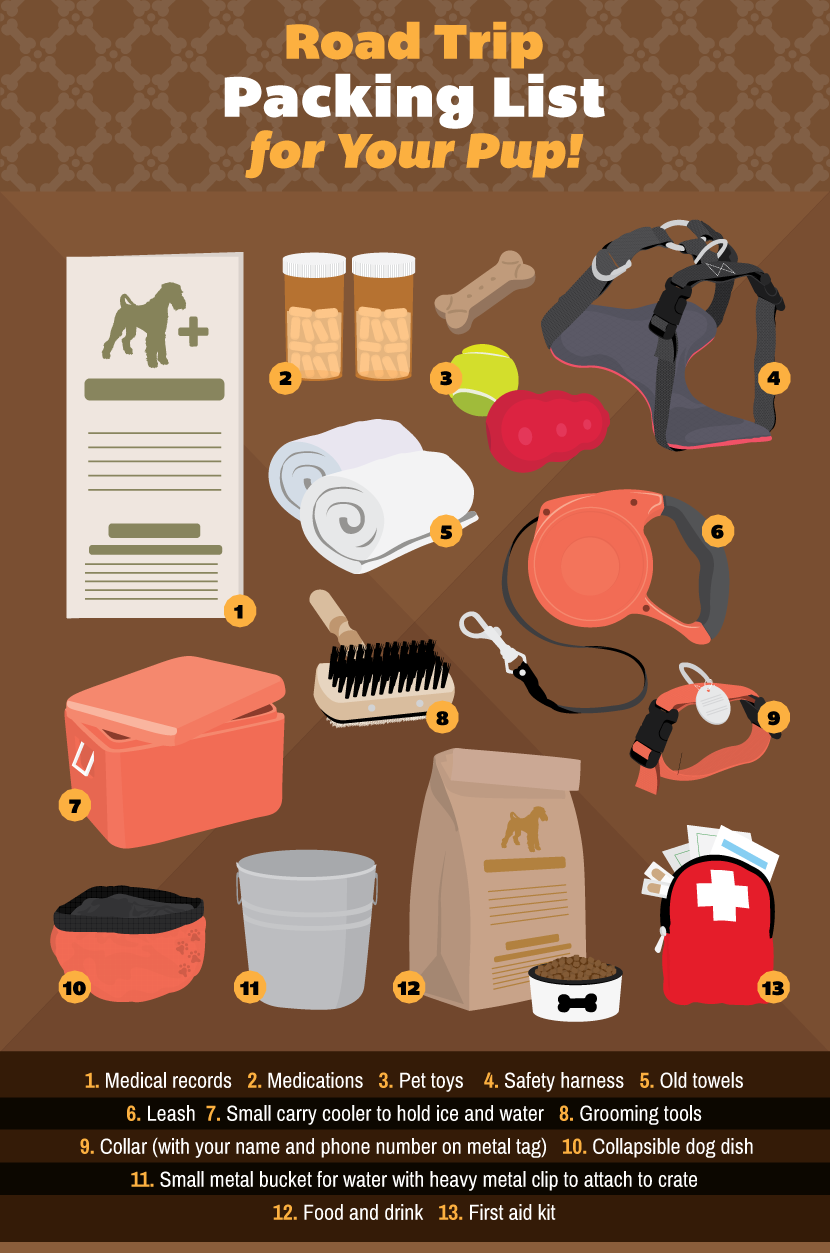
Pack your dog’s medications and a first aid kit with Benadryl, bag balm or Neosporin, a roll of sterile gauze, sterile gauze pads, wide tape, scissors, and tweezers. Serious outdoors people who may find themselves out on the trail far from emergency care may also consider bringing needle-nose pliers (for porcupine quills) and a surgical wound stapler and surgical staples for potentially life-threatening injuries. Check the Humane Society of the U.S. for a much more comprehensive list.
Bring along the address, phone number, and hours of a vet at your destination. I learned that last bit of advice after three terrifying experiences on the road that required immediate medical attention: a nasty leg wound from a barbed-wire fence, a run-in with a porcupine that filled my dog’s mouth with quills, and a vicious hive of ground bees that bit another dog’s face, causing massive swelling. The vet I frantically called told me to put a large Ziploc bag of ice on it, and give her a Benadryl. It worked.
Make copies of medical records, including rabies certificates, and keep them in your glove box. The HSUS also recommends current pictures of your dog.
This may seem a little James Bond to you, but consider getting a microchip implant for ID. This is critical in worst-case scenarios such as the nightmare that could occur if your dog gets lost or if you get in an accident and your dog runs off. Yes, it happens all the time.
If you haven’t been doing so already, do preventive medical care before you leave for a trip, including flea, tick, and heartworm treatments and a Lyme vaccination if you’re going to an area where it might be an issue – and especially if you plan to take your dog out in the woods or on a camping trip.
Changes in routine can make a car trip even more challenging when you have a pet along. There are a few things you can do to make it easier:
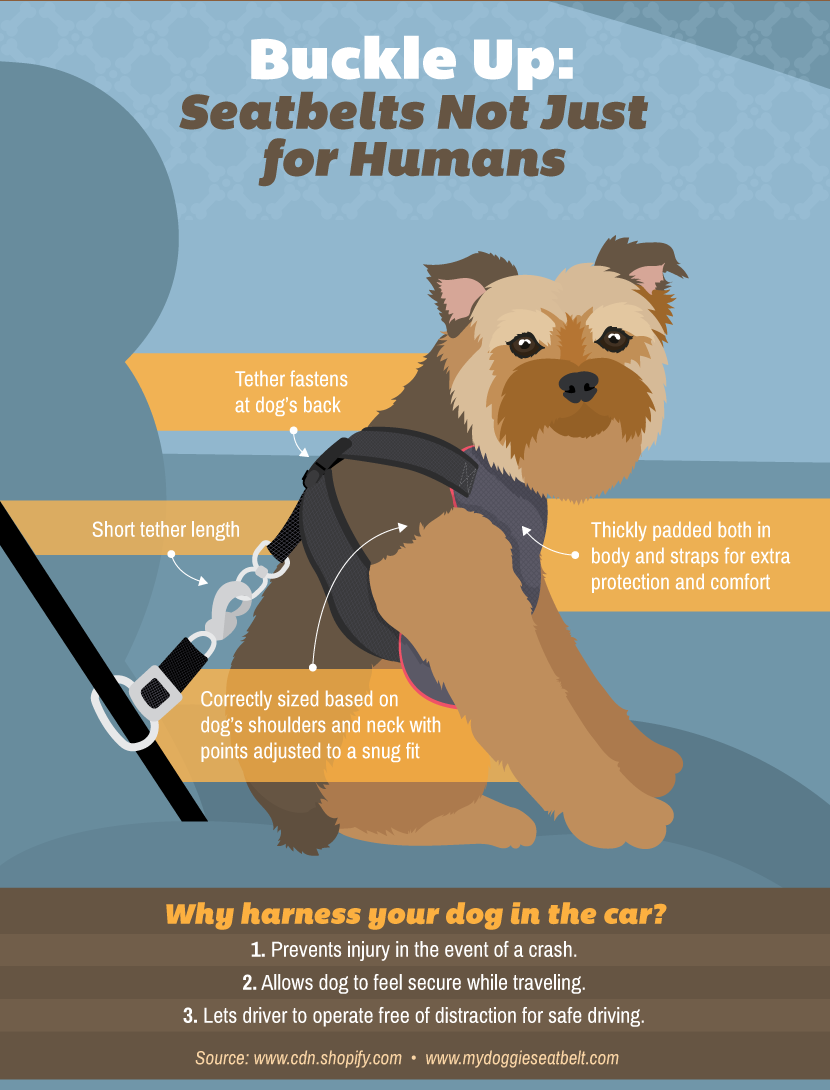
You should not let your dog ride loose in the car. Let me say that again: You should not let your dog ride loose in the car, let alone in the back of a pickup. I have a terrifying story about doing that once, and looking back while on the freeway to see my dog was no longer back there. Hours later, I found him; he had jumped out at an enticing picnic spot when I was still at low speed.
Safety and comfort, both for the dog and yourself, are much improved if you use a crate that is specially designed to carry a pet in the car. Wire crates allow more airflow. Some vehicles have tie-down loops in the cargo area, which are perfect for securing the crate with heavy, adjustable tie-down straps. Add a thick rubber mat or dog bed for extra comfort.
The whole point of crating your dog in the car is safety, so it might surprise you to know that there aren’t any federal safety rules covering crates. One place to look to learn about what makes a safe crate: the Center for Pet Safety, which did a safety study in 2015, co-sponsored by Subaru. You should also use common sense. What you want is a crate large enough that your pet can comfortably recline and turn around inside, but not so large that he will be tossed around whenever you change lanes.
It’s not always possible or convenient to have a crate permanently lodged in the back of the car. You still should not let your pet ride loose. I did some tests on various harnesses and created a how-to video on using them. You can get used to strapping in your dog the same way you strap in a child or make your adult passengers fasten their own seat belts.
Keeping your dog’s diet consistent is Rule #1. Bring their own food in gallon-size plastic storage bags, which are easier to store and manage than a big dog food bag.
Do your best to use the water from home, too. This is trickier, but you can do it if you use the power of ice. For water, you can use a cardboard milk carton to freeze home tap water in a large chunk for a day trip. For weekends, bring a large cooler or gallon jugs, again filled with frozen water from home. For everyday commuting, get a portable water bottle.
For longer commutes and hot days, bring a cooler filled with ice for the passenger compartment. As it thaws, it turns into water for your pet to drink. If you’re just out for the day, use the water and ice from your home tap, which your dog’s system is used to. Professional dog show people have been known to go one step further and bring a super-large construction crew cooler full of water from home.

Keep your pets on their routines as much as possible to keep their anxiety levels low. Keep them hydrated. Feed them at their regular times. Stop in out-of-the-way safe places for pit stops. I don’t like the pet walking areas in rest areas, because I don’t want to expose them to the diseases of other dogs. I’d rather find a more pristine location. And I’m a pooper-scooper-upper. You should be, too. So bring the necessary supplies – plastic bags, scoops, hand wipes – to do that.
Porcupine attacks. Ground hive bee attacks. Serious flesh wounds from tangling with a barbed-wire fence. All of these things have happened to one or another of my dogs while we were a long way from home. It’s terrifying, and it has taught us to locate veterinarians at our final destination before we leave home.
I learned a lot about finding a comfortable car temperature from traveling to dog shows with my Chesapeake Bay retriever, Bob. Here are my tips for taking dogs on car outings where you’ll need to leave him in the back when the weather is warm to hot.
Embed the article on your site

Written by:
Flying can be a minefield of potential missteps, from booking your ticket t...

Making your own dog treats at home is a great way to save money and keep yo...
From the United States to Japan and back, custom motorcycle styles are a gl...
Get your fix of expert articles delivered straight to your inbox!
No Thanks - I don't like cool stuff