




Like what you're reading?
Get your fix of expert articles delivered straight to your inbox!
Oops! Please double check your email address.
No Thanks - I don't like cool stuff


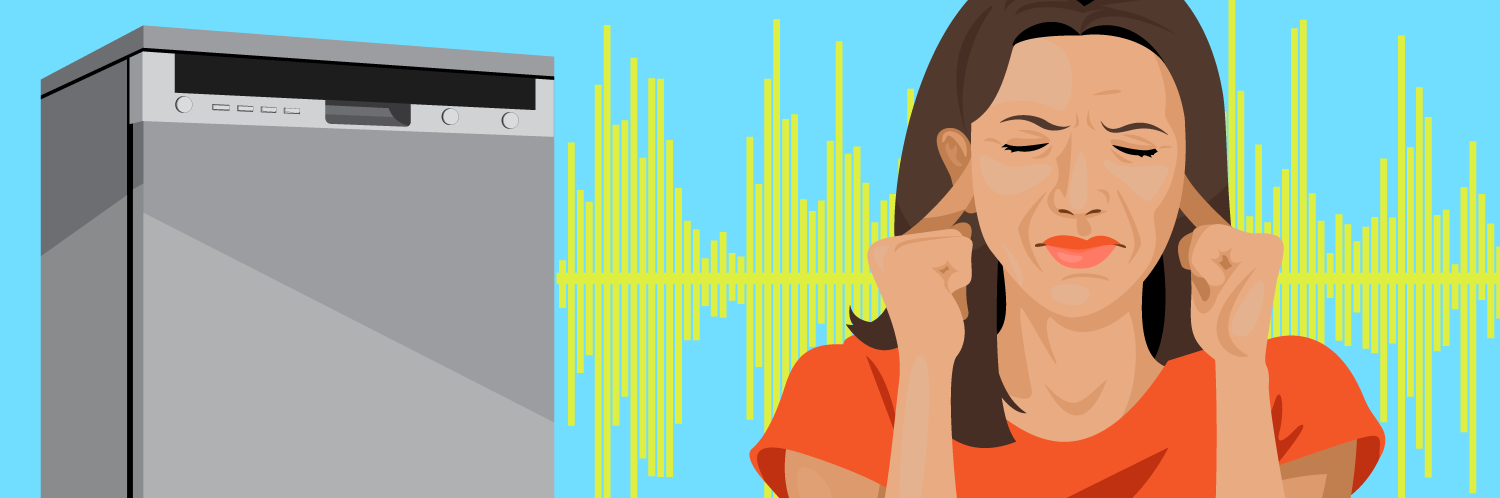
If you have to raise your voice to be heard over your dishwasher, then it’s too dang loud! When buying a new dishwasher in the mid-tier to high-end of prices, those models will typically have sound-deadening materials already built into the machine. If budget is a concern, or you have an older appliance you may not be as lucky. If that’s the case, you may want to take the DIY approach to add some soundproofing to your dishwasher. Follow along with our steps below and learn how we decreased the noise of our dishwasher by an impressive amount!
Before we give the range of decibels where dishwashers typically fall, we thought it would be helpful to provide some other references for context. The hum of your fridge or a normal conversation is about 40 dB, a vacuum cleaner or hair dryer is between 60-90 dB, and lawn equipment running is about 90-110 decibels. The higher the number and the longer you’re exposed to the noise, the more likely you are to experience hearing damage or loss. Under 40 dB is considered quiet, below 60 is moderate to normal noise, above 60 is loud and above 85 dB is where the permanent damage begins.
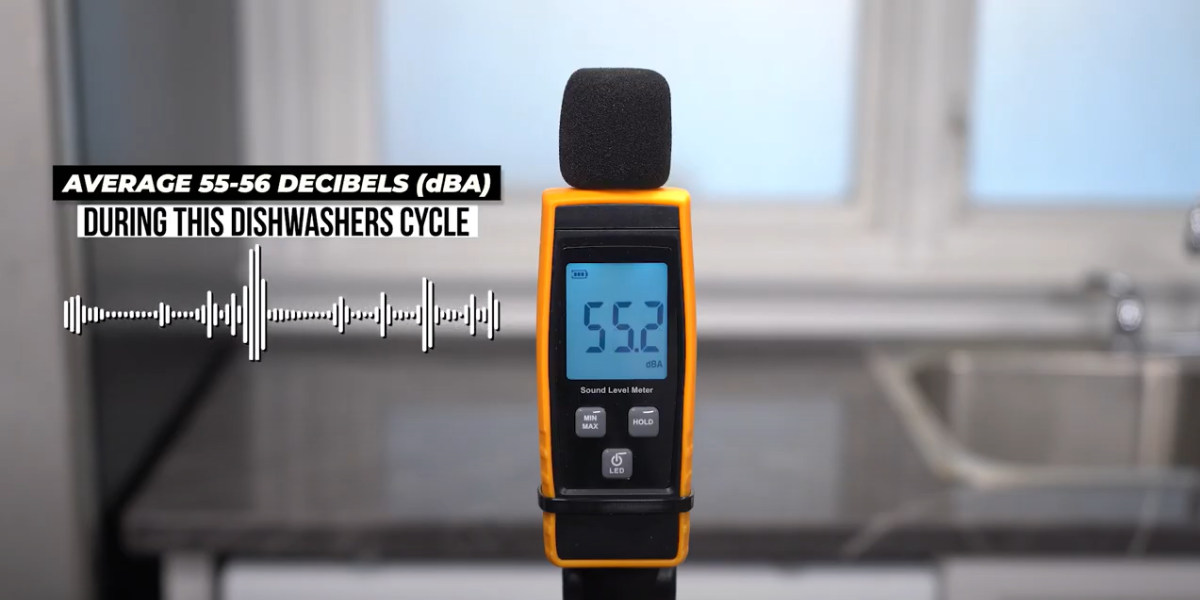
Modern dishwashers are usually between 45 to 60 decibels, but if you have an older model, it could be coming in above 60 dB. Some different factors will affect the noise levels, such as the type of interior tub (plastic or stainless steel), and any soundproofing that might already be installed. If you can have a conversation, watch TV, or run your dishwasher at night without waking up, you probably have a quiet machine already! If that’s not the case, we’re going to show you how to add some extra soundproofing layers to your machine. Our test machine had an average running noise level of 55 decibels, let’s see how it comes out after the soundproofing is added.
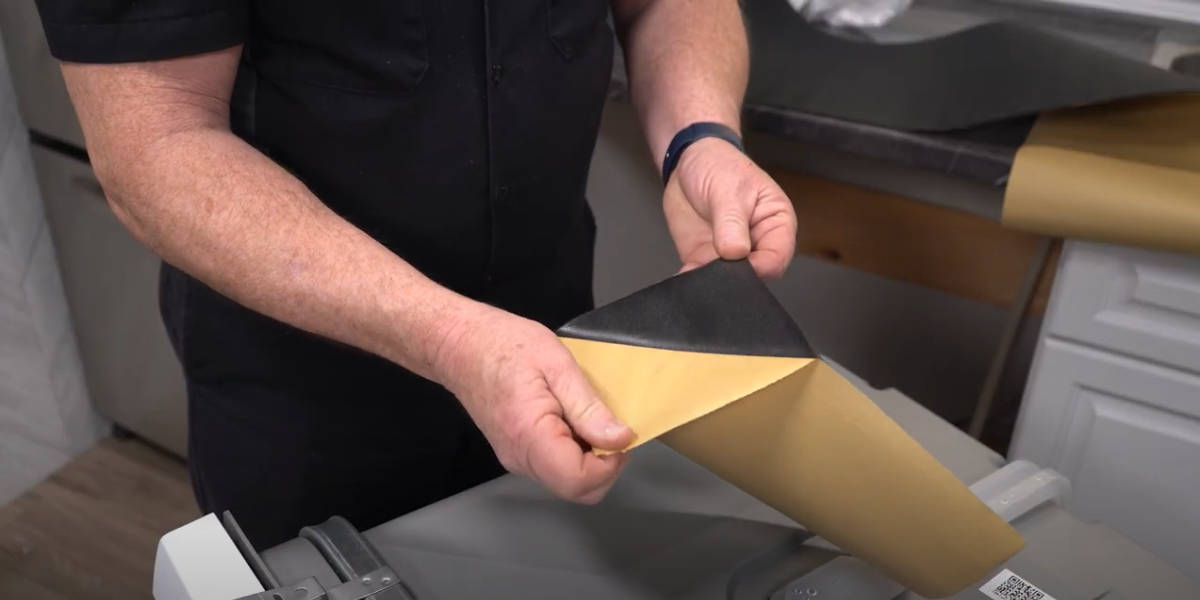
When your dishwasher was newly installed, the manufacturer would’ve provided a layer or insulation blanket with the machine. This not only provides some soundproofing, but also protects your cabinets from heat, and reduces the vibrations. However, that material is usually thin (Chris likens it to a pillowcase, for example). So here is what you should look for when adding more soundproofing and insulation to your dishwasher:
Just one layer of your choice will help to reduce the noise levels, but if cabinet space allows you can add multiple layers around your dishwasher. One thing to note is to leave any inlets and vents free and clear of your material. You want to ensure that there is still proper airflow around these.
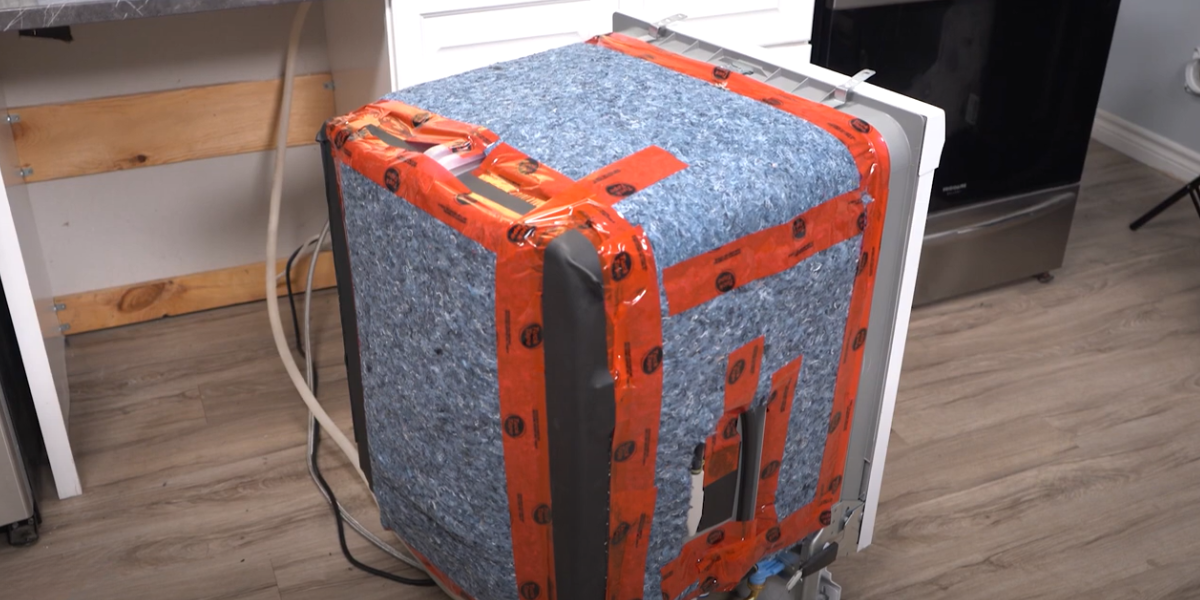
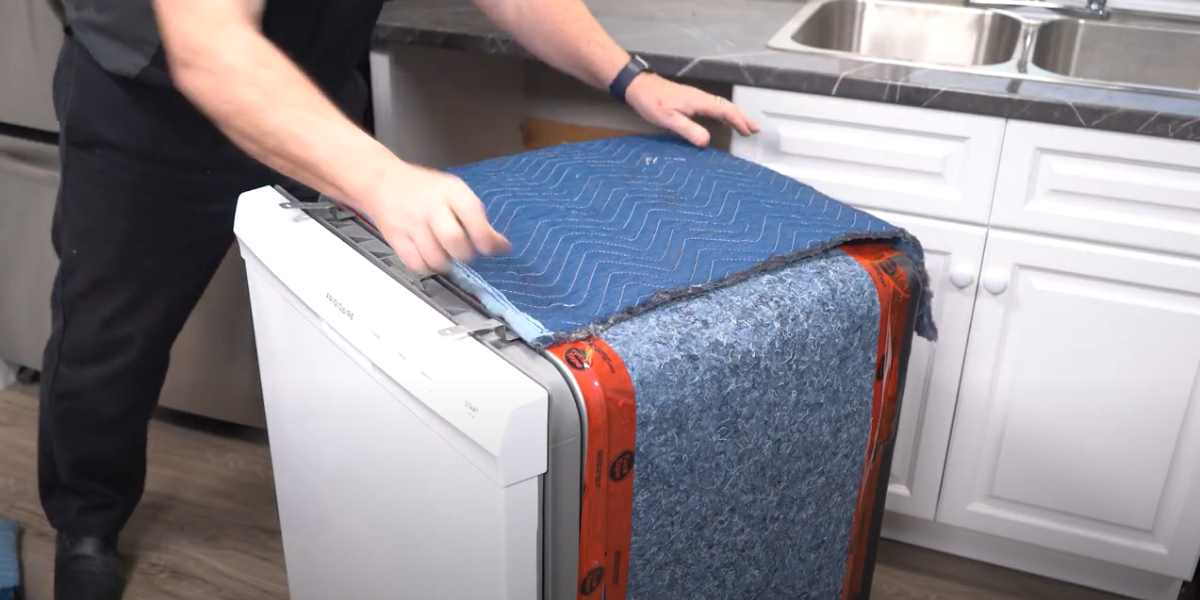
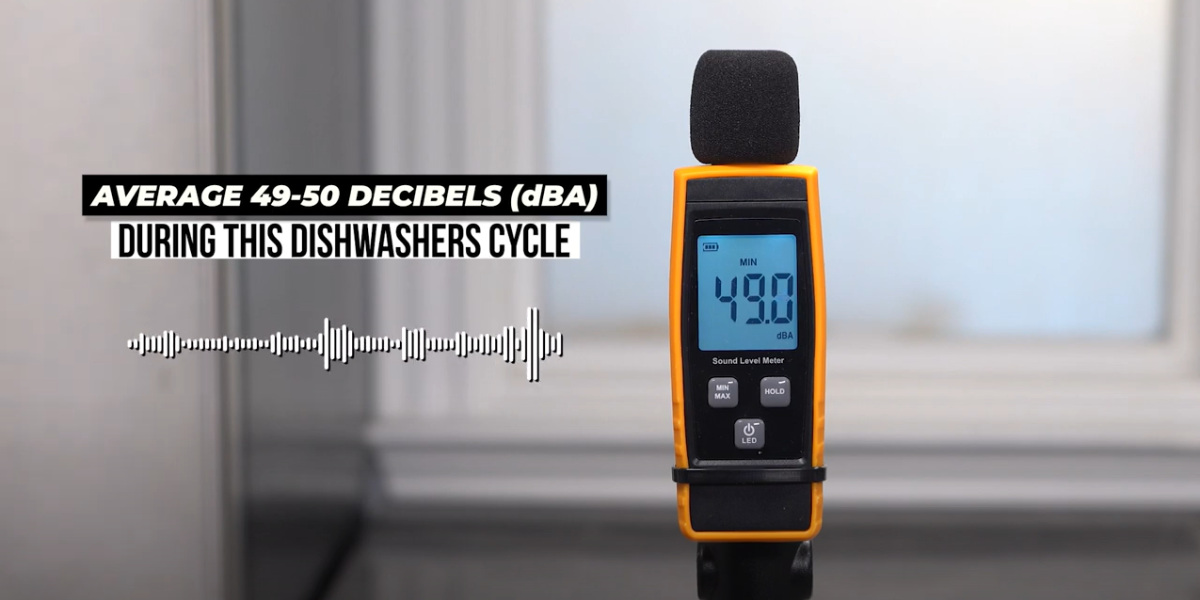
When we ran our tests after, our noise level dropped to 49 decibels, which is a 10% reduction compared to before. At that level, you’ll notice the dishwasher is running but it won’t ruin your conversations or TV binge-watching.
If you previously had a quiet dishwasher, and it’s now started to make noises, soundproofing won’t help! In this case, a part is likely starting to fail, and you should check that out. Some common parts that can become noisy are the drain pump, bearings, or a loose spray arm. You can learn more about diagnosing and repairing these parts on our dishwasher repair page.
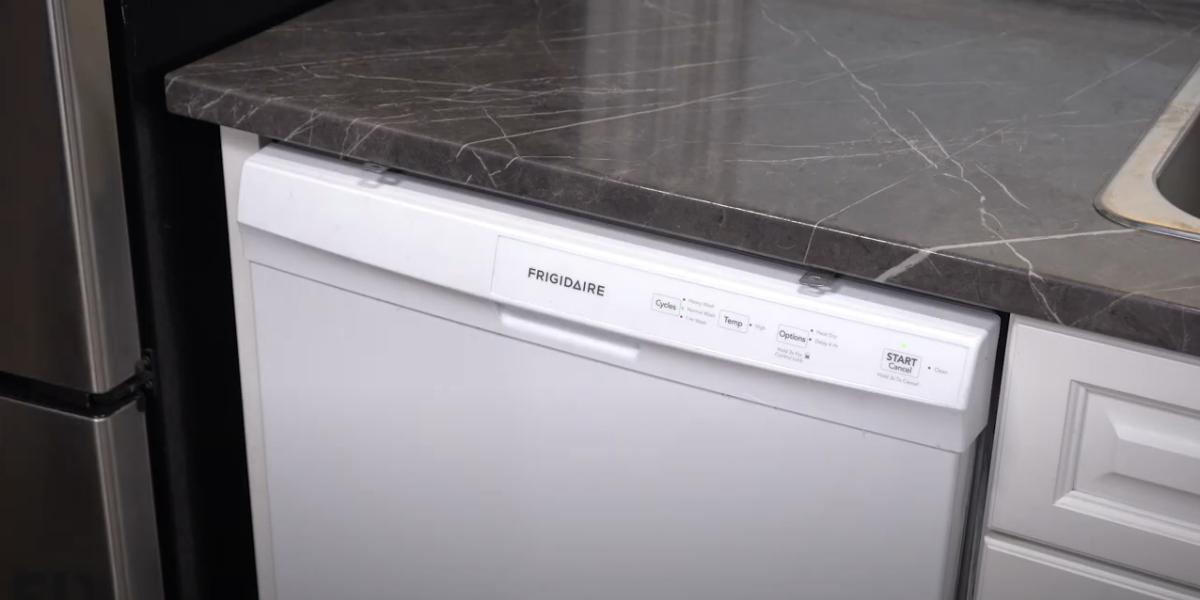
Adding the extra soundproofing layers to your dishwasher not only saves your eardrums, but it can help save you some money as well! The insulation helps keep the heat inside your dishwasher and prevents damage to the surrounding cabinets and countertops. This easy and inexpensive DIY is a win-win in our books! If your dishwasher is beyond saving and you’re in the market for a new one, be sure to check out our 2023 dishwasher buying guide before starting your research. For help with more DIY projects around the home, make sure you follow us on Instagram and TikTok, where we share exclusive content!
Written by:
Written by:

Energy-efficient appliances can be a great way to reduce the energy consump...

Are all the extra features worth the extra cost when buying a new dishwashe...
Tired of hand-washing and want to get rid of the old and in with the new? I...
Get your fix of expert articles delivered straight to your inbox!
No Thanks - I don't like cool stuff